
Visiting Joshua Tree National Park during the winter
All Photography © Paul Martinez
What the season brings, and how to be prepared
Winter in Joshua Tree National Park is quieter, cooler, and often misunderstood. While many visitors associate deserts with heat, winter reveals a different side of this landscape — one shaped by cold nights, shifting light, and subtle ecological changes.
For those who come prepared, winter is one of the most rewarding times to experience the park.
What Winter Looks Like in the Desert
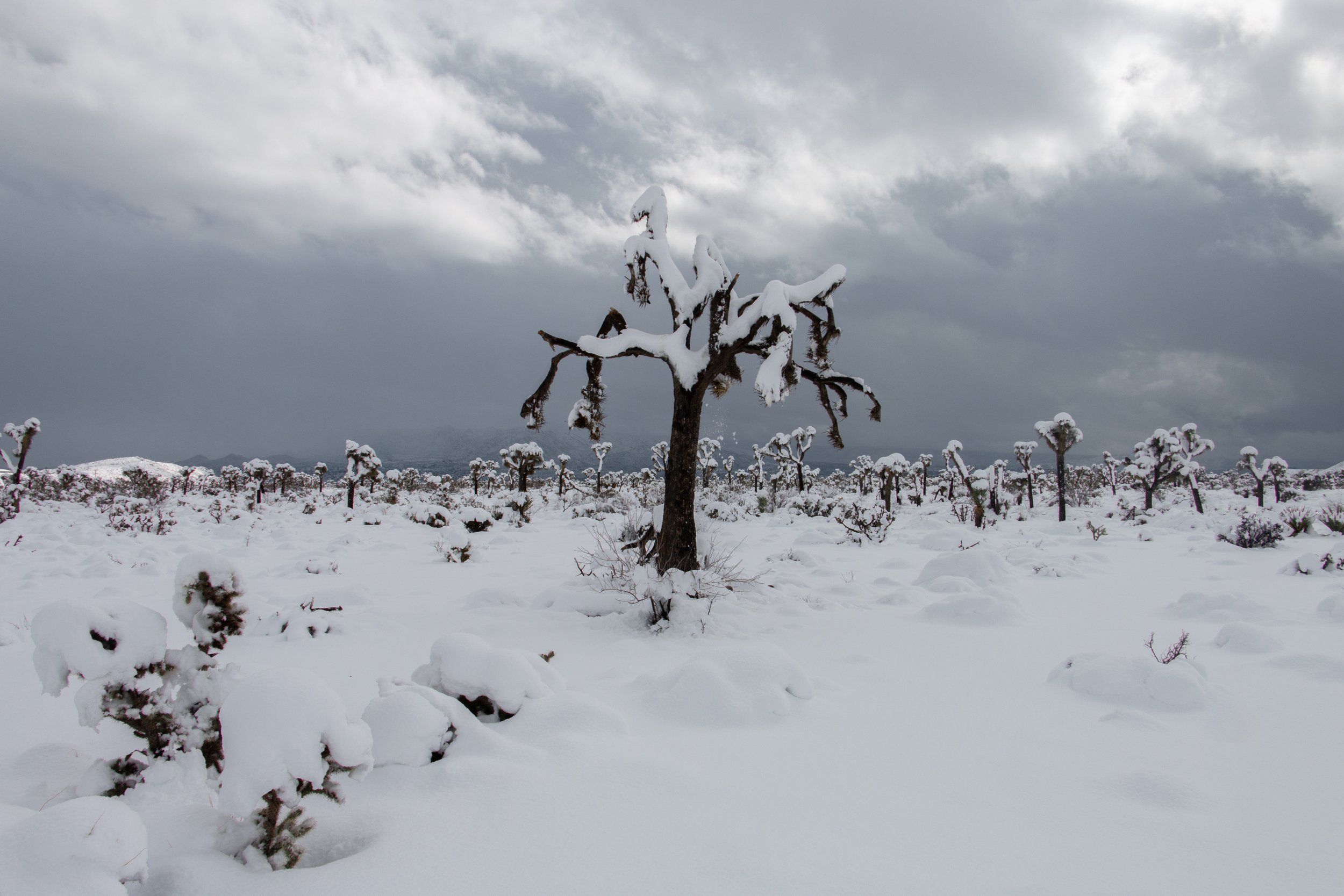
Winter temperatures in Joshua Tree are generally mild during the day, often ranging from the 50s to 60s, but nights can drop below freezing. Higher elevations in the park, especially in areas like Keys View or Black Rock Canyon, can feel significantly colder, and snow or ice is possible after storms.
The lower angle of the sun brings softer light, longer shadows, and cooler tones across the landscape. This season highlights the textures of rock formations, the structure of Joshua trees, and the vastness of the open desert.
How the Desert Responds
Winter is a period of rest and conservation for many desert plants and animals. Reptiles retreat underground, mammals become more active during daylight hours, and birds adjust their migration patterns. Joshua trees, creosote bushes, and other desert plants slow their growth, conserving energy for the warmer months ahead.
This seasonal pause is part of the desert’s long-term resilience. What may appear still or quiet is, in reality, preparation.
What Visitors Should Know
While winter offers cooler hiking conditions and fewer crowds, it also requires thoughtful planning.
Dress in layers. Temperatures can vary widely between morning and afternoon, and shade can feel much colder than sun.
Bring plenty of water. Even in winter, dehydration is common. The dry air and wind increase water loss.
Prepare for limited daylight. Shorter days mean earlier sunsets. Plan hikes accordingly and carry a headlamp or flashlight.
Check weather and road conditions. Winter storms can bring high winds, rain, or snow. Some roads may temporarily close due to ice or flooding.
Know that services are limited. There are no food, gas, or water stations inside the park. Cell service is unreliable. Download maps and information in advance using the NPS app.
Camping and Night Temperatures
Winter camping can be beautiful and quiet, but nighttime temperatures can drop well below freezing. Cold-weather sleeping bags, insulated pads, and wind protection are essential. Campfires are only allowed in designated fire rings, and fire restrictions may still apply depending on conditions.
A Season for Stillness
Winter invites a slower pace in Joshua Tree. It’s a season for long views, quiet trails, and attention to detail — the curve of a rock face, the silhouette of a tree, the way the desert holds heat and releases it slowly into the night.
With preparation and respect for the environment, winter can be one of the most memorable times to visit.
For current conditions, closures, and updates, always check the official National Park Service website before entering the park.