
Joshua Tree National Park in Spring: A Local Guide to Wildflowers and the Busy Season
Photography © Paul Martinez
Spring is when Joshua Tree National Park looks the way people imagine it should. Longer days. Comfortable temperatures. Clear skies. The desert waking up in small, specific ways.
It is also the park’s busiest stretch of the year.
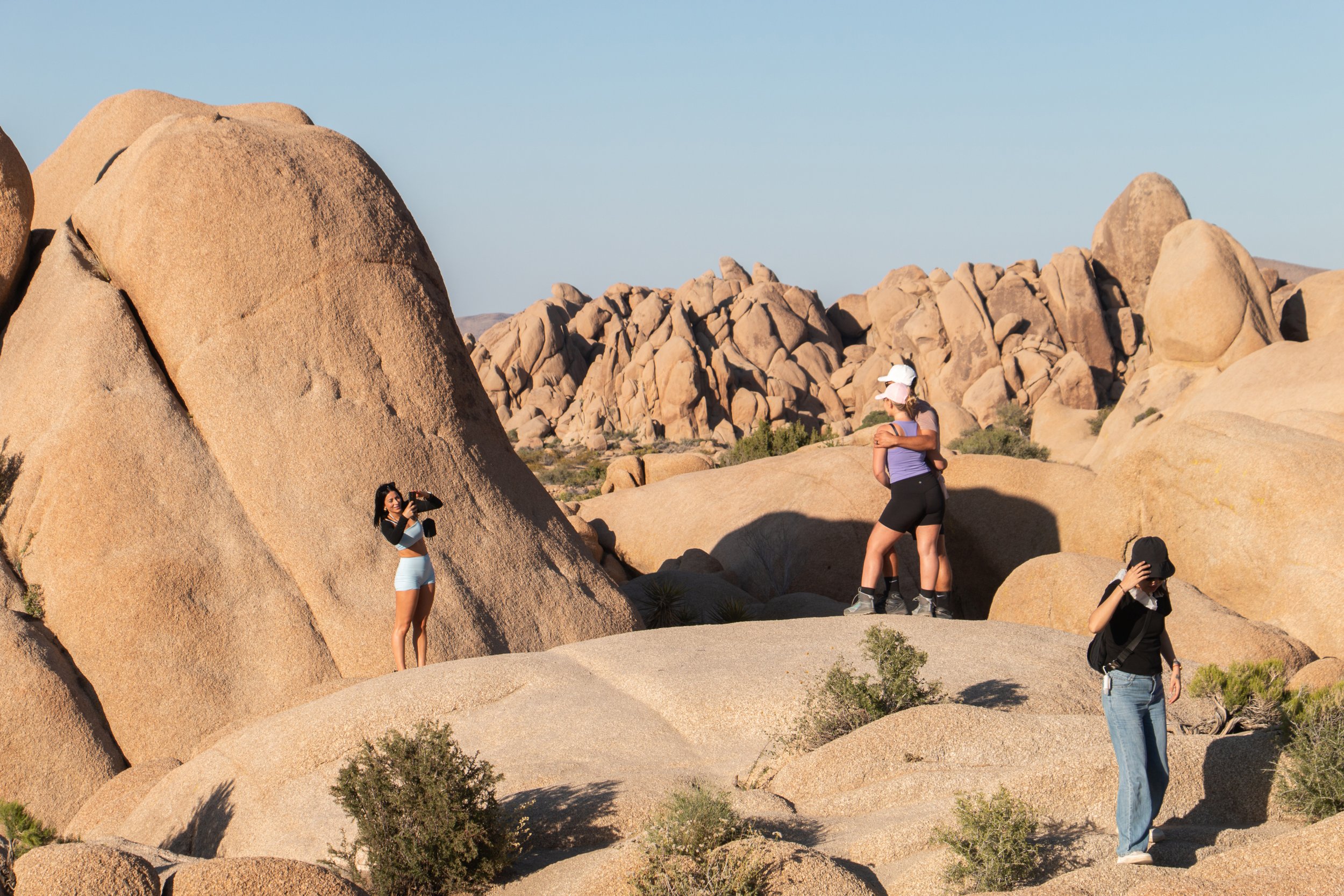
From March through mid-April, weekends, holidays, and spring break can bring long entrance lines, traffic congestion, full parking lots, crowded trails, and campgrounds at capacity. If you show up expecting solitude and a “quick stop,” spring has a way of humbling you.
This guide is meant to help you enjoy what spring does best, without getting caught off guard by what spring does worst. That includes a realistic take on wildflowers, how to plan around crowds, and how to experience the park with care.
What spring feels like in Joshua Tree
Spring is the sweet spot for weather. NPS notes spring highs typically fall in the 70–85°F range, with cooler nights, which is exactly why so many people choose this season. The park is open 24/7, but the crowds are not evenly distributed.
What to expect in peak weeks:
Entrance lines are common, especially at the West Entrance. A recently completed expansion added multiple booths and lanes, helping traffic flow more smoothly and moving the checkpoint deeper into the park.
Limited parking at popular trailheads and viewpoints
Busier trails adding congestion
Full campgrounds, often booked far in advance
If you plan for that reality, spring can still feel easy.
How to beat the crowds without ruining your day
The simplest strategy is the most effective: arrive early.
NPS recommends arriving before 8 a.m. to beat the crowds. In spring, that can mean the difference between pulling right into a trailhead and circling for 30 minutes.
A few more practical moves:
Visit on weekdays. NPS notes weekdays are typically less crowded than weekends.
Avoid exiting right after sunset. That is a common bottleneck.
Know that the West Entrance is often the busiest. For faster entry and exit, NPS suggests the North Entrance in Twentynine Palms or the South Entrance off I-10.
Come stocked. There is no food, water, or gas available inside the park.
Download offline maps. Cell service is limited, and the NPS app supports offline use.
Local rule of thumb: plan one “must-do” early, then let the rest of the day be flexible.
Wildflowers in Joshua Tree: the honest version
Let’s clear up the biggest misconception first.
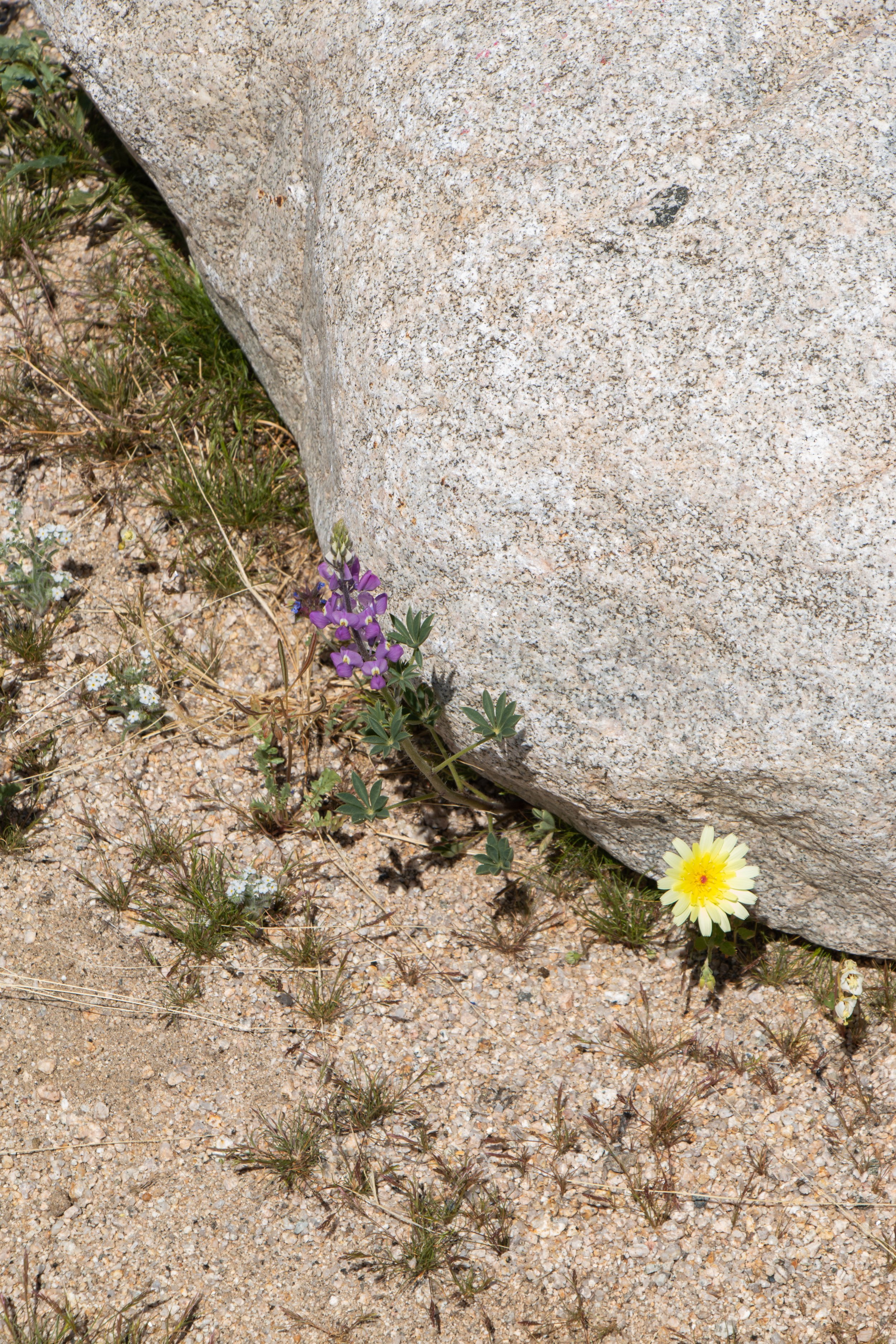
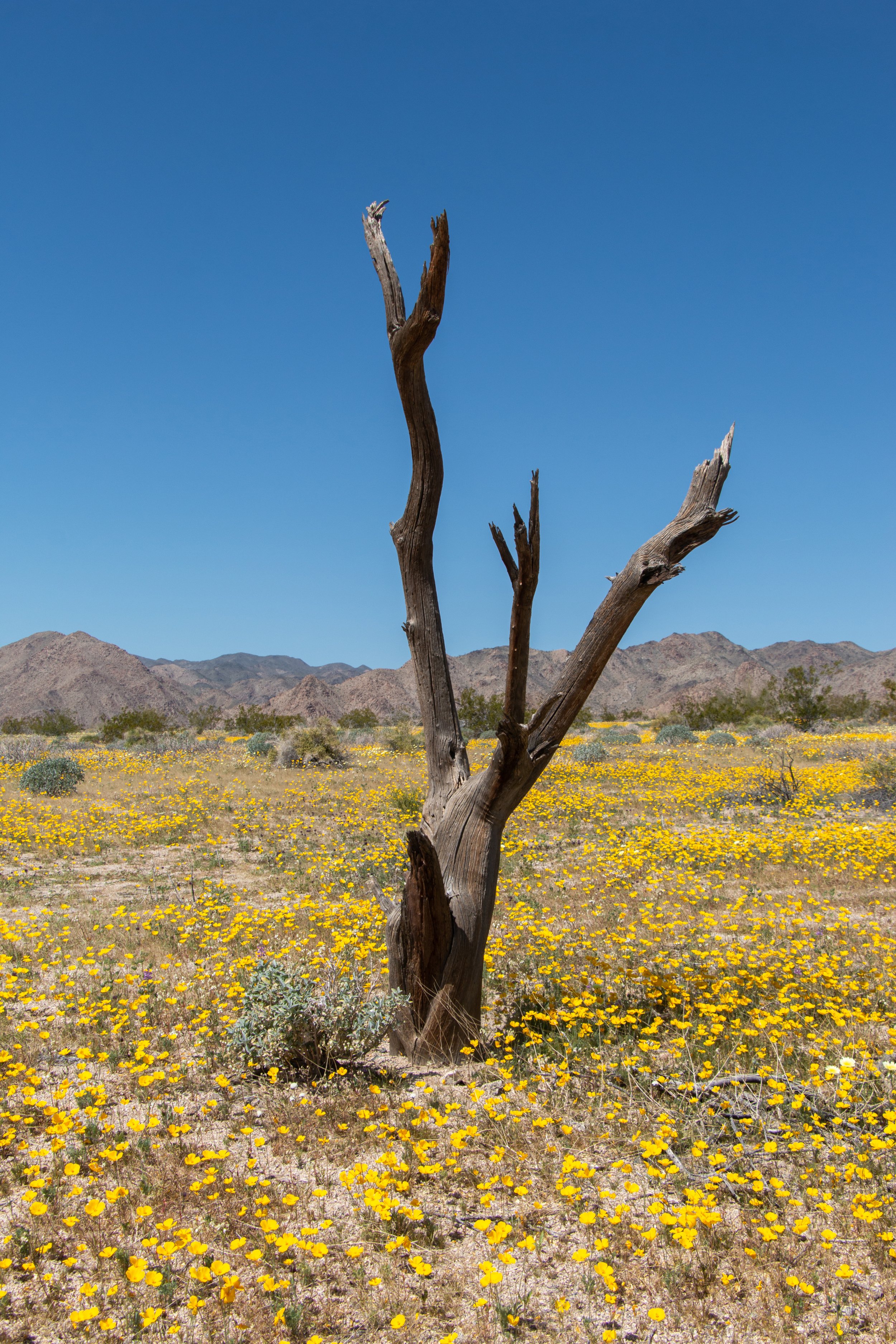
Joshua Tree can have wonderful wildflowers, but it isn’t the desert’s most reliable “carpet of color” destination. When it blooms here, it often blooms in pockets. The reward is in noticing, not in expecting one sweeping spectacle. Every now and then, conditions line up for an exceptional display, sometimes called a “superbloom,” but that is exactly what it is: a rarity.
The park’s wildflower page is straightforward about how unpredictable blooms can be, and also confirms that some amount of wildflowers bloom every year.
How bloom timing works in the park
NPS explains that blooms generally progress by elevation:
First: lower elevations like the Cottonwood area
Next: mid-elevations like the Joshua tree forests along Park Boulevard
Last: higher elevations near Black Rock
They also note the park usually starts seeing wildflowers in January and February, with flowering continuing through spring and into summer.
A recent Visit California update echoes this same pattern, with abundant lower-elevation flowers early, then mid-elevation blooms near major park stops later, and higher elevations near Black Rock later still.
Joshua trees blooming versus “wildflowers”
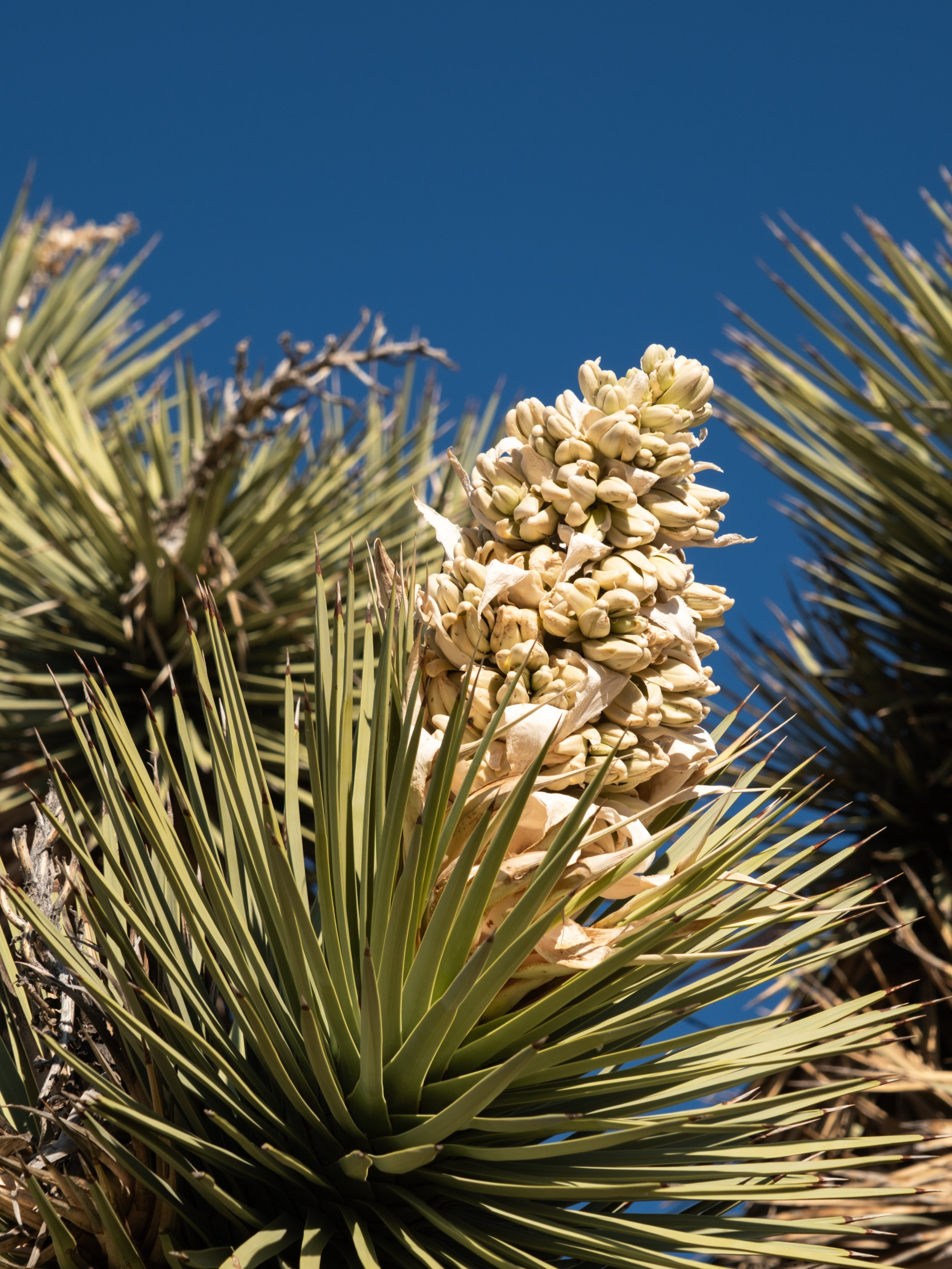
Joshua trees themselves usually bloom mid-February through April, though unusual early bloom events have been recorded. If you catch Joshua trees in flower, it can feel like the desert’s own celebration. Just remember that the smaller annuals are often low and easy to miss.
NPS advice that genuinely helps: look low. Many desert wildflowers stay extremely low to conserve energy and reduce exposure to wind and sun.
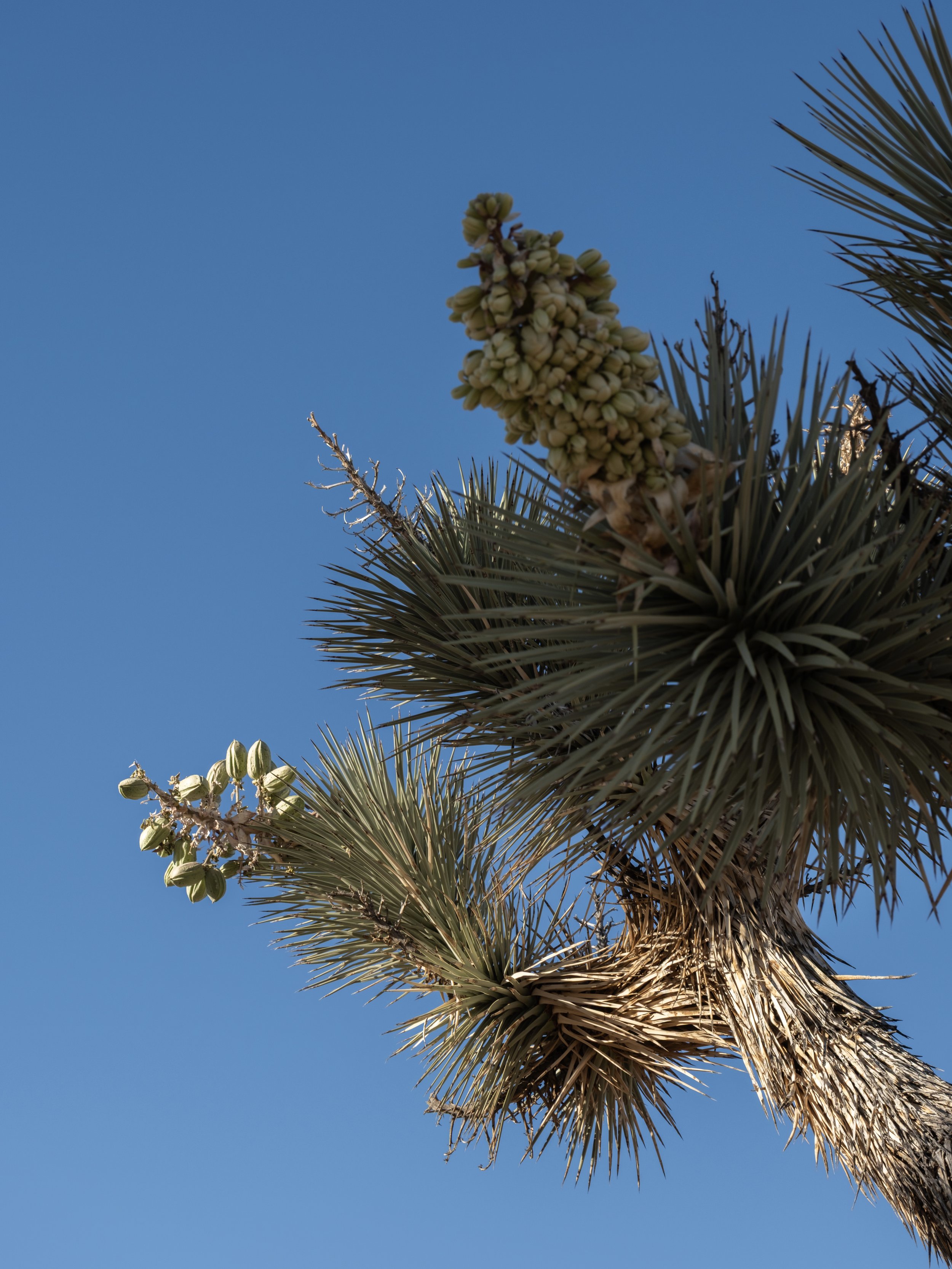
About “superblooms” and where expectations go wrong
The word “superbloom” has become shorthand for spring in the desert, but it is not a yearly guarantee anywhere. It is the result of specific conditions lining up.
If your main goal is a classic, widespread wildflower display, you may find bigger, more dramatic expanses in other deserts during the right year. Anza-Borrego, for example, even emphasizes that blooms can be scattered, but pockets of color still reward people who slow down and explore.
The good news is that Joshua Tree does not need a superbloom to be worth spring. The park’s spring appeal is bigger than flowers. It is temperature, light, and the feeling of the desert becoming active again.
A better way to frame spring wildflowers here:
Go looking for details, not fields
Expect variability, even across short distances
Let the park be beautiful without needing it to perform
How to see wildflowers responsibly
Wildflowers are not just pretty. They are future seasons in progress.
NPS is clear about what helps, and what harms:
Stay on trail to avoid soil compaction that limits air, water, and nutrients to roots.
“Take photos, not flowers.” Removing flowers reduces potential for future blooms, and picking is prohibited.
Move slow, watch your step, and avoid crushing vegetation.
If you want that iconic flower-in-foreground shot, do it from the trail or a durable surface. The best spring photo is the one that does not cost the desert anything.
A simple spring plan that works
If you want a low-stress spring day in the park, build it around rhythm:
Early morning (arrive before 8 a.m.)
Hit your “must-do” while parking is still reasonable.
Mid-morning
Choose a second stop that is flexible. If a lot is full, move on without fighting it.
Midday
Take a break. Eat, hydrate, and reset. Remember, there is no water available in the park interior.
Late afternoon
Return for a short walk or scenic drive.
Sunset
Sunset is beautiful from almost anywhere, but popular areas can get crowded, and NPS warns that Keys View can be extremely congested on busy days. If you go for sunset, go early and keep expectations realistic.
Spring checklist
Use this as your minimum:
Water and extra water (no water available in the park interior)
Food and snacks (no restaurants or stores inside the park)
Layers (warm mornings, warmer afternoons, cooler nights)
Offline map (limited reception)
Patience (spring is peak season)
Respect for blooms (stay on trail, take photos, not flowers)
The local takeaway
Spring in Joshua Tree National Park is not a secret, and it is not a quiet season. It is a season of shared experience. That can be frustrating if you arrive expecting emptiness, but it can also be part of what makes spring feel alive.
If you come early, stay flexible, and treat wildflowers like the fragile miracle they are, spring here delivers something better than hype.
Not a guaranteed spectacle, but a desert that rewards attention.